Understanding
body odor
Body odor is a normal part of being human. We look at what creates it, why it changes across the body, and how that understanding can lead to more appropriate care.
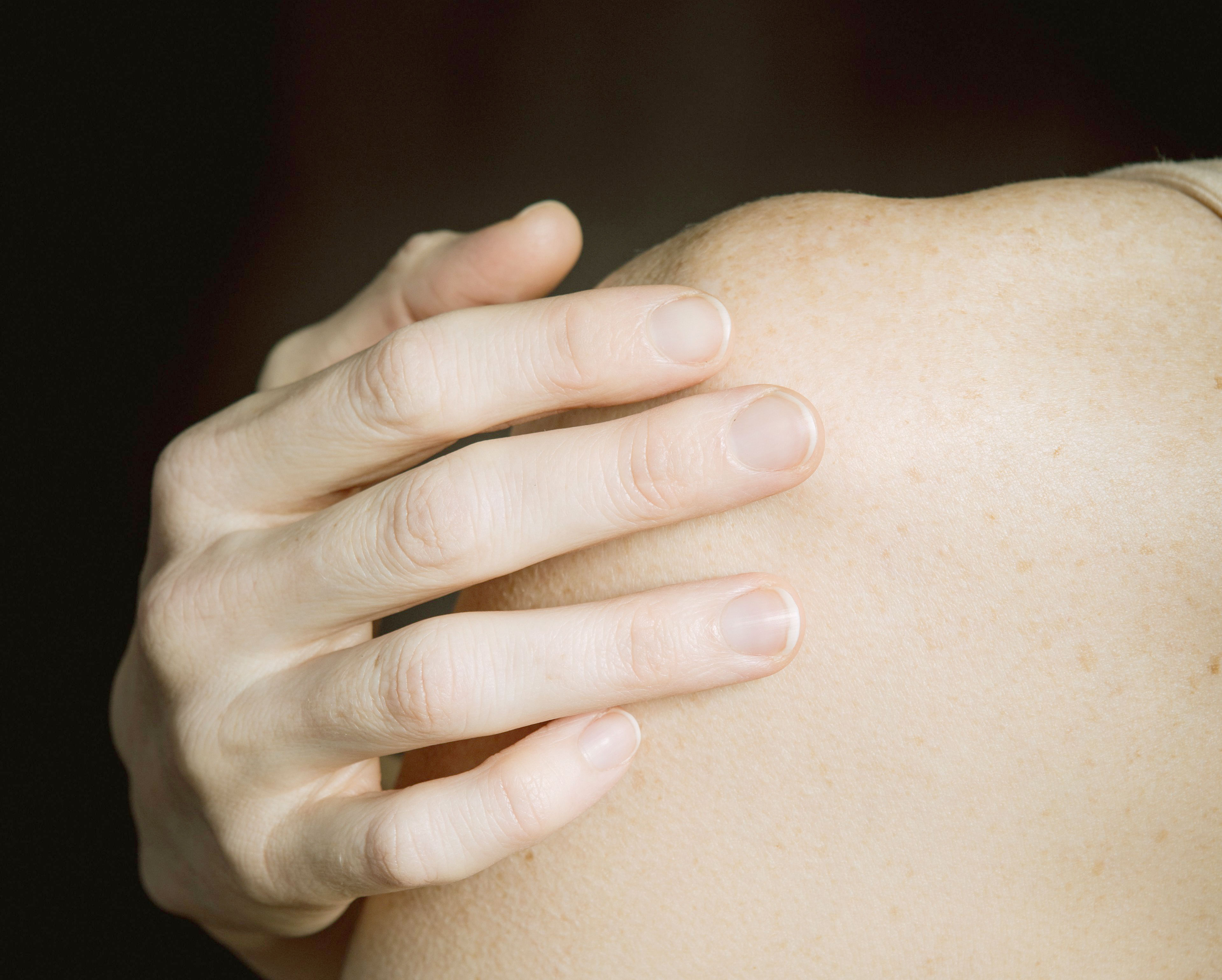
What creates odor
Sweat is only part of the process.
In many areas, sweat itself has little odor. What becomes noticeable often develops after secretions reach the skin or mouth, where bacteria can transform them into volatile compounds.[1][2]
For us, this distinction matters. It means fragrance can be part of a product, but it should not be the only idea behind it.
References [1] Rudden M, et al. Scientific Reports. 2020;10:12500. [2] Choi H-N, Cho Y-S, Koo J-W. Int J Environ Res Public Health. 2022;19(1):108.
Why location matters
The conditions are not the same everywhere.
Underarms tend to stay warm and enclosed. Feet spend hours inside footwear. The scalp produces sebum. The mouth has its own microbial environment. Moisture, airflow, temperature and friction all change with location.[3][4][5]
That is why we organize care by zone. The body is connected, but a useful solution still has to make sense for the place where it is used.
References [3] Callewaert C, Ravard Helffer K, Lebaron P. Am J Clin Dermatol. 2020;21(Suppl 1):4–11. [4] Miao T, et al. Scientific Reports. 2021;11:20356. [5] Suzuki K, et al. Microorganisms. 2021;9(10):2132.


Why we take it seriously
A small concern still matters.
Sometimes odor is simply the thought that crosses your mind before sitting close to someone, taking off your shoes or raising an arm. It does not define anyone, and it does not need to become a source of embarrassment.
We take it seriously because small practical concerns can affect comfort and attention. Our role is to make odor easier to understand and manage, so people can get on with everything else in their day.[6]
Reference [6] Olszewska-Czyz I, Sozkes S, Dudzik A. J Clin Med. 2022;11(2):326.
Our approach
We start with the cause, the location and the way a product will actually be used. That is what science-led means to us: understand first, formulate with purpose, and keep the routine clear.
Explore the body map